
By Darlene Cah
Key Takeaways
- The Quarter Horse is the only breed that originated in America
- Quarter Horses have an innate “cow sense”
- Quarter Horse racing dates back to colonial times
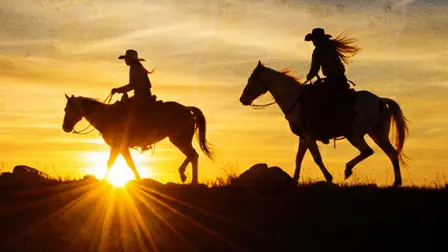
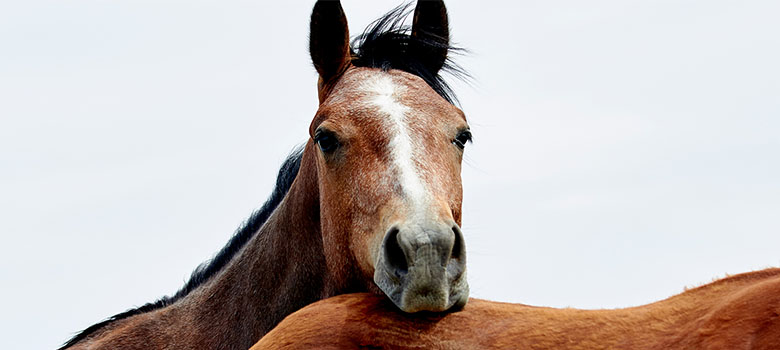
In the old days, a cowboy was only as good as his horse. His livelihood—and his life—depended on his horse. And no horse fit the bill in the Old West better than the Quarter Horse. But the breed dates back to the 1600s when colonists crossed their heavy English stock horses with feisty Chickasaw horses, descendants of the Spanish Barb horses, making the Quarter Horse the only breed that originated in America. The new breed became the perfect horse for explorers and frontiersmen forging their way West. They were sure-footed, agile, level-headed, fast, and had superior cow sense.
Today, the Quarter Horse is a popular and versatile breed—from horse racing to ranching, the rodeo arena to the jumper ring, to a family trail ride in the woods. The American Quarter Horse does it all.
On the Ranch
Shows like Ultimate Cowboy Showdown and The Cowboy Way demonstrate that the cowboy life is not just a romanticized legend of bygone days. Strong, determined men and women today, some carrying on the legacy of generations before them, still work cattle, breed and train horses—from sunup to sundown, hauling hay, feeding and doctoring livestock, mending fences, schooling young horses, and much more.
While today’s ranchers might drive an ATV out to the pasture to check on the herd, the ATV can’t “read” a cow—only an intuitive Quarter Horse can do that. Quarter Horses have an innate understanding of how cows think. So, to move cattle to a different grazing spot over rough or boggy footing, or to drive cows to the corral and sort them for, say deworming or vaccinations, a cowboy still needs a good, steady horse. Advances in machinery and technology might change some aspects of how cowboys work, but nothing will replace the Quarter Horse. A good ranch horse must be calm yet fast, strong yet agile, and have a great work ethic.
Two world-renowned Quarter Horse breeding ranches are Four Sixes (est. 1870), made even more famous by the TV series Yellowstone, and King Ranch (est. 1853), both in Texas.
At the Rodeo
The star-spangled spectacle of the rodeo is a sight to behold, with fringe and bling and bulls and brawn. Even scaled down on a local circuit, it’s an event to marvel. Not surprisingly, rodeo competition has its roots in ranching and started informally in the 1800s when American cowboys and Mexican vaqueros challenged each other to show off their skills.
The simple competitions held at different ranches grew popular attracting audiences and later paved the way for flashy performances such as Buffalo Bill’s Wild West Show, a traveling ensemble that included rodeo demonstrations. One famous Old West rodeo star was Bill Pickett, a former slave who invented steer wrestling. He and sharpshooter, Annie Oakley took part in Buffalo Bill’s exhibitions.
Today’s rodeos combine the best elements of a fun show with parades and music, and the guts and grit of edge-of-your-seat competition. Center stage is the Quarter Horse. Since rodeos are made up of vastly different events, for example, steer roping versus barrel racing, you may see a variety of shapes and sizes of Quarter Horses, as they’re often bred for the physical and temperamental traits that suit specific sports.
Some popular rodeo events include:
Tie-Down Roping: Also known as calf roping, the cowboy ropes a calf, dismounts, and ties three legs, while the horse, with the other end of the rope attached to the saddle, stands still, holding the rope taut.
Team Roping: A two-cowboy effort, as the first, called the header, ropes the steer’s horns or neck, and the second, called the heeler, ropes the hind legs.
Barrel Racing: A speed event usually with women competing. Individually, cowgirls race flat-out around three large barrels in a cloverleaf pattern.
Other types of competitions that may be part of a rodeo or stand-alone events are:
Cutting: The cowboy “cuts” a cow from the herd, then it’s the horse’s responsibility to keep the cow from running back. The Quarter Horse’s cow sense is on full display in this intense event. As the horse locks eyes with the cow, they practically mirror each other. The rider should not influence the horse’s movement.
Reining: The horse and rider must work seamlessly together as they ride specific patterns and movements at a lope or gallop that include sliding stops, circles, and spins.
At the Track
Horse racing is often equated with thoroughbreds and the pursuit of the coveted Triple Crown, starting with the Kentucky Derby, followed by the Preakness Stakes, and the Belmont Stakes. But thoroughbreds aren’t the only equines to gallop to the finish line. The spunky little Quarter Horse can keep pace with, or even outrun, a big excitable thoroughbred—for about a quarter of a mile or so before losing a little of that spunk. The thoroughbred is the long-distance runner. The Quarter Horse is the sprinter, adding an extra spark of excitement to a day at the races.
Quarter Horse racing began in Virginia in the mid-to-late 1600s. For a bit of fun, farmers would race their horses along straight paths for about a quarter of a mile—and that’s how this popular new horse breed became known as the Quarter Horse.
There are over 60 Quarter Horse racetracks in the United States, most located in the south and west. The sport continues to thrive, and like its thoroughbred counterpart, it has its own Triple Crown, all run at Ruidoso Downs Racetrack in New Mexico. The races include, the Ruidoso Downs Futurity, the Rainbow Futurity, and the final leg, boasting a purse of $3 million, the All American Futurity.
In the Arena and On the Trail
From local shows to regional and national events, horse showing offers competitors dozens of opportunities to demonstrate and test their skills—and let their Quarter Horses shine. Quarter Horses perform well not only in Western classes such as Ranch Riding, Ranch Trail, and Pole Bending, among many others, but also under English tack in hunters on the flat, over fences, and more.
But even if you don’t work cows, or barrel race, or chase points on the show circuit, a solid, even-tempered Quarter Horse is a reliable and fun trail horse. Heading off into the woods on the back of a horse, seeing the world from a new perspective, is a prize in itself.
Suggest a Correction
We strive for accuracy and fairness. But if you see something that doesn’t look right, click here to contact us!
About the Author
Native New Yorker, Darlene Cah is a writer, actor/improvisor, and digital content specialist based in North Carolina. Her short stories have appeared in Smokelong Quarterly, Red Earth Review, Have a NYC (Anthology), Referential Magazine, and other journals. Fiction awards include Soul-Making Keats Literary Competition, Emrys Fiction Prize, Semifinalist ScreenCraft Cinematic Short Story Contest, and more. Advertising awards include Finalist Media Post Awards for email, Honorable Mention Clios, One Shows, and Andys (print). When not writing for INSP, you’ll find her on stage, backstage, or coaching improv for Shakespeare & Friends Theater Company. And, of course, playing fetch with her dog.
Next Story

Story