Key Takeaways
- McCrea was opposed to taking roles that promoted violence or used profanity.
- Commitment to his beliefs made him a favorite amongst Western audiences.
- McCrea felt most comfortable playing roles that resembled who he was off-screen.
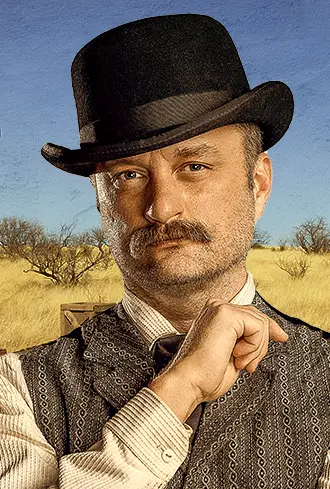
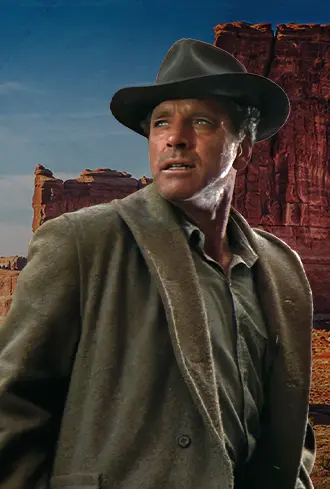
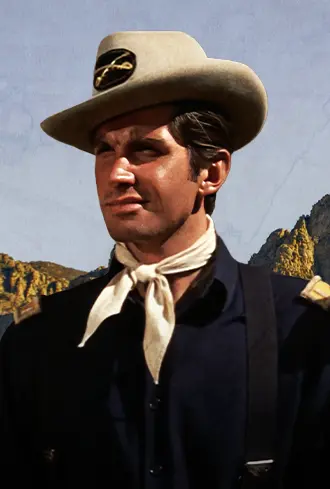
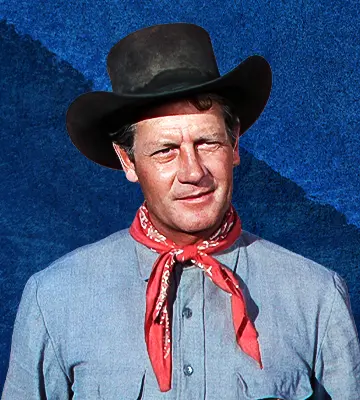
Spanning from 1930 to 1980, there were more Western stars than you can count—John Wayne, Clint Eastwood, James Stewart, Glenn Ford, James Arness and so many more had successful runs through those five decades. But no star had a stronger moral compass than Joel McCrea.
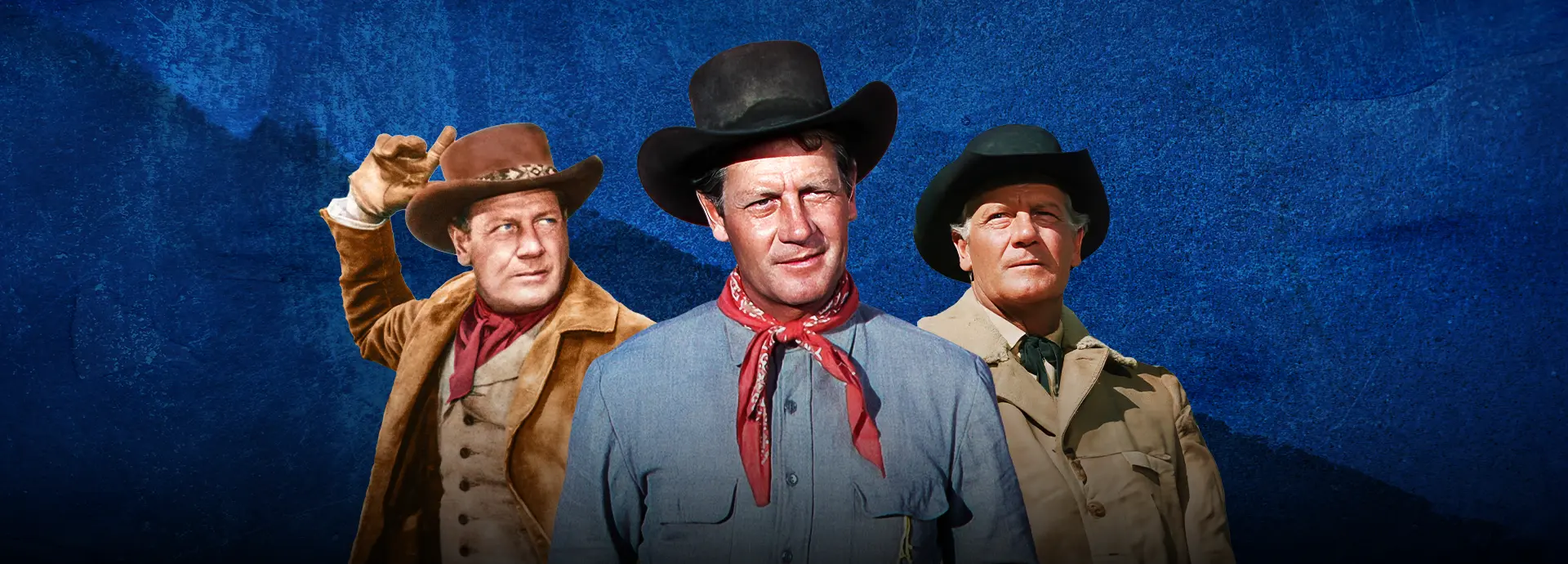
Featured in 80-plus films over his career, McCrea earned his share of the spotlight. But when an offer came his way that differed from the beliefs he held about how a man should act, McCrea stood firm in his stance and said no to plenty of lucrative opportunities. He famously turned down the lead role in The Postman Always Rings Twice for exactly that reason.
A renowned Hollywood star, McCrea made a career out of his ability to transcend genres. He could be funny, dramatic and real in every realm of the cinematic universe. But where his talent truly shined was in Westerns, for two primary reasons.
McCrea was a true cowboy and rancher in his everyday life on his sprawling land in Thousand Oaks, California. He knew the feeling of a saddle and understood the value of a hard day’s work.
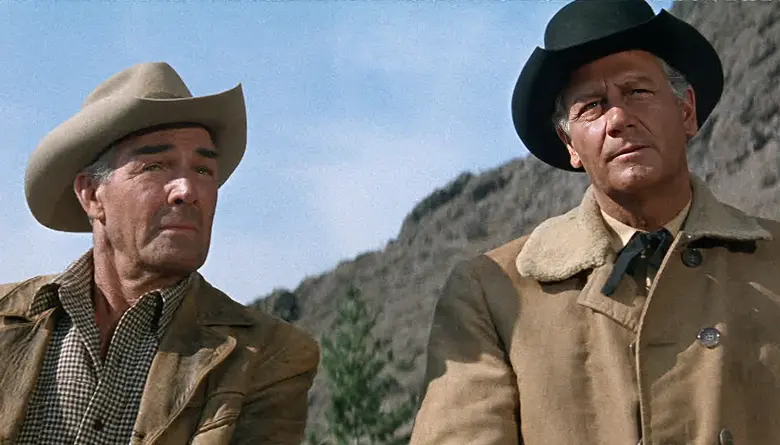 He also shared the same ethical values as many of the men he portrayed. Adamantly opposed to cussing on camera, and weary of violence for violence's sake, McCrea had no problem passing on a role that didn’t align with his conscience. This commitment over his decades-long career took the man from California to heights few actors ever reach in the eyes of their fans.
As the great sportswriter Grantland Rice once said: “When the One Great Scorer comes to write against your name, he writes not that you won or lost, but how you played the game."
That quote may have originated from his days covering football, but the same principle applies quite well to the life of Joel McCrea. He was a saint in the saddle.
When McCrea said goodbye to the silver screen in the mid-70s, he spent the rest of his days on the ranch, a large portion of which was donated to the Conejo Recreation and Park District following his passing. Today it has been listed on the National Register of Historic Places and is an important remaining example of the large cattle ranches that once defined its region of California.
Quite the legacy.
Suggest a Correction
We strive for accuracy and fairness. But if you see something that doesn’t look right, click here to contact us!
About the Author
Born and raised in South Texas, Cavender Neutze is a writer who prefers to start his days with breakfast tacos and end them with classic Westerns. After graduating with a degree in Telecommunication Media Studies from Texas A&M University in 2014, Cavender began his journalistic career covering every collegiate sport under the sun. Since 2021, he has returned to his cowboy roots as a contributor for INSP. An avid golfer, reader, and lover of history, Cavender is always willing to wax poetically on the values espoused by generations who came before him.