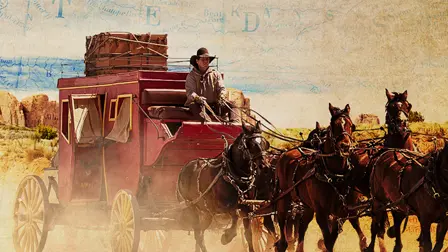
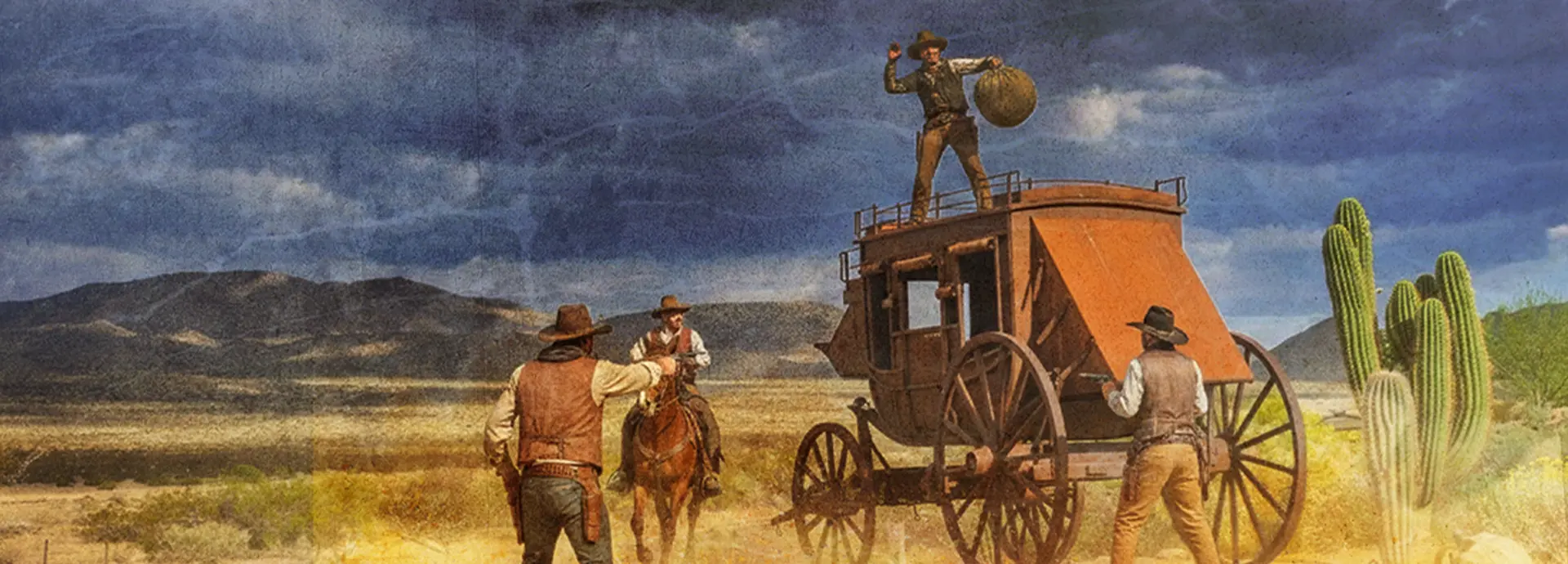
On the silver screen, a stagecoach heist is often a high-speed chase through a dusty canyon, with masked riders galloping alongside a panicked team of horses. While these scenes make for great entertainment, the reality of a frontier robbery was often much more calculated and quiet. For a highwayman, the goal wasn't a spectacle—it was a quick, efficient score.
To understand how these outlaws operated, you have to look at the "101" of a heist: the location, the timing, and the specific methods used to bring a 3,000-pound coach to a dead stop.
 The Location: Finding a ‘Dead Man’s Curve’
A successful heist began long before a single shot was ever fired. Outlaws typically chose "dead man’s curves" or steep uphill grades where a driver was forced to slow his team to a walk. By using the natural terrain, a lone gunman could step out from behind a boulder, catch the driver off guard, and command him to "throw down the box."
Surprisingly, speed was rarely the outlaw's friend. A moving coach was an extraordinarily challenging target, and a driver under fire was likely to whip his horses into a dangerous frenzy. Instead, the most effective method was the element of surprise. Most heists were over in a matter of minutes, as the outlaws focused solely on the Wells Fargo treasure box tucked under the driver’s seat.
The Defense: The Role of the Shotgun Messenger
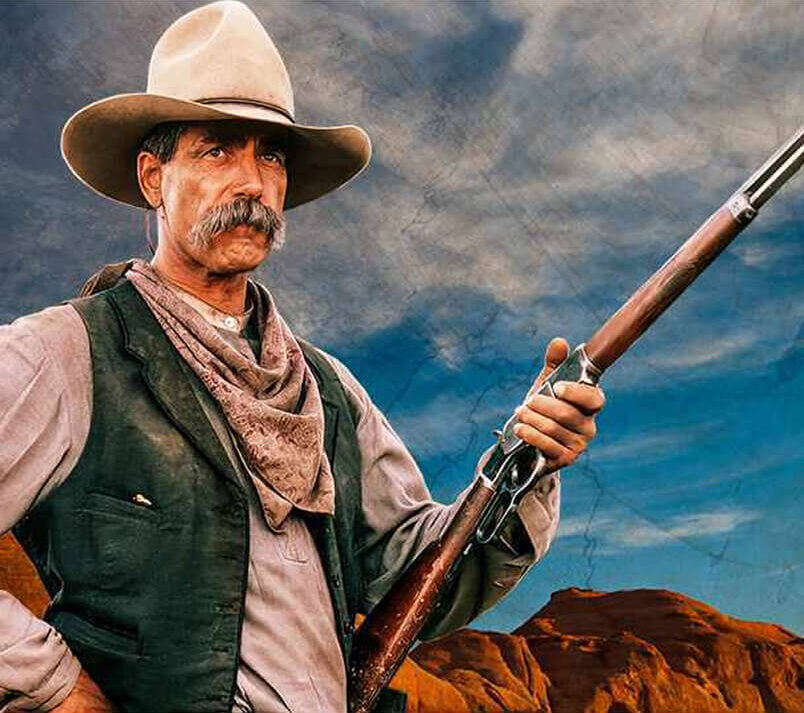
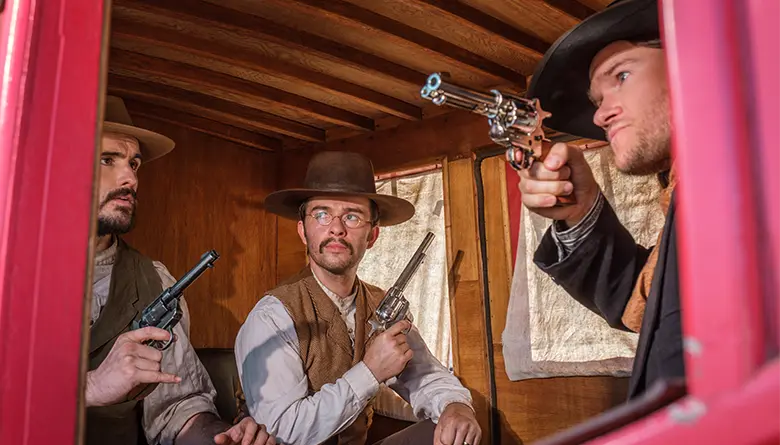
The primary obstacle for any road agent was the man sitting to the driver's left. This was the "shotgun messenger," a private guard hired specifically to protect the valuables on board. Armed with a short-barreled, large-gauge shotgun, these men were the frontier’s version of an armored car guard.
Their presence was often enough of a deterrent to keep less-experienced outlaws at bay. However, for determined gangs, the messenger was the first target. The 101 of stagecoach defense meant that if the messenger could be intimidated or neutralized, the rest of the passengers—usually terrified and unarmed—would offer little resistance.
The Reality: Myths of the Highwayman
One of the biggest myths of the West is that passengers were routinely robbed of every personal possession they owned. While this did happen on occasion, professional outlaws often ignored the passengers entirely. Dealing with a dozen witnesses took time that the highwaymen just didn't have. Their eyes were on the gold, the payroll, and the mail.
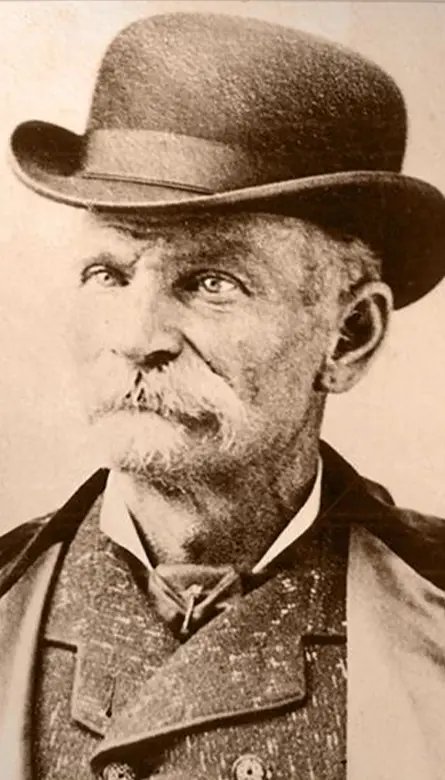
Another common misconception is that heists always involve a massive gang of outlaws. In truth, many of the most successful stagecoach robbers worked entirely alone. Perhaps the most famous example was Charles E. Boles, better known as Black Bart. Between 1875 and 1883, he successfully robbed nearly 30 Wells Fargo coaches across Northern California without ever harming a soul.
Known as a "gentleman bandit," he maintained a reputation for being polite but firm, often leaving behind poems at the scene of the crime and never once firing a shot during his entire career. By simply stepping from the brush with a leveled shotgun and a calm command, a single man could successfully hold up an entire coach, proving that a sharp wit and the element of surprise were often more effective than a dozen gunmen.
A Dangerous Trade
The era of the stagecoach heist eventually faded as the "iron horse" offered a more secure and predictable way to transport the nation’s wealth. But the stories of these encounters remain a vital part of Western lore. These robberies were rarely the mindless acts of violence you might think; instead, they were a high-stakes game of strategy played out on the loneliest stretches of the American frontier.
Whether it was the steady hand of a shotgun messenger protecting his cargo or the clever planning of a lone road agent, these moments tested the grit and resolve of everyone involved. Today, these tales of the road serve as a reminder of the risks taken to keep the West connected, long before the trails were replaced by tracks and the highwaymen became legends of days gone by.
Suggest a Correction
We strive for accuracy and fairness. But if you see something that doesn’t look right, click here to contact us!

About the Author
Reagan Johnson has spent more than 20 years in television, publishing, and marketing, with the last four as a contributing writer, content strategist, and editor for INSP. Her travel writing has appeared in Forbes Travel Guide, Smithsonian Magazine, MSNBC Travel, Jetsetter, ISLANDS, and Weddings Unveiled, along with custom content for clients including Oil Nut Bay and Brand USA. She has served as travel editor-at-large and digital content fact-checker for Smithsonian Magazine’s native travel features. Reagan also manages a boutique marketing agency specializing in travel, hospitality, and tourism brands, blending editorial expertise with strategic insight to create engaging, audience-focused content.