Key Takeaways
- In North Texas, Lewis Peacock and Bob Lee led rival camps across four counties.
- Violence escalated after the Pilot Grove shooting and Lee’s kidnapping and a forced $2,000 note.
- From 1867 to 1871, ambushes, raids, and assassinations left as many as 40 men dead.
Post-War Powder Keg
After the Civil War, the rural crossroads of Fannin, Grayson, Hunt, and Collin counties in North Texas simmered with resentment. Many former Confederates bristled at Reconstruction and the federal troops enforcing it. Into this volatile environment stepped Lewis Peacock, a Union League organizer who settled near Pilot Grove (earlier known as Lickskillet) and rallied freedmen, Union loyalists, and Republican officials to protect civil and voting rights. On the other side was Bob Lee, a former Confederate cavalryman whose return home stirred tensions with Peacock’s growing influence.
Pilot Grove Turns Deadly
In February 1867, Lee confronted Unionist Jim Maddox inside a Pilot Grove store. As Lee turned to leave, Maddox shot him in the head, grazing him. Lee was treated at home by Dr. William H. Pierce. Just days later, on Feb. 24, 1867, Peacock ally Hugh Hudson shot Pierce dead in front of his house—an outrage that armed both camps and pushed the community toward open war.
Not long after, Peacock’s men captured Lee, claiming to take him to Sherman, the Grayson County seat. Instead, in the Choctaw Creek bottoms, they stripped him of his watch and $20 in gold and forced him to sign a $2,000 promissory note. Lee refused to pay and later won a lawsuit in Bonham, the seat of Fannin County. By Aug. 27, 1868, violence had grown so intense that Gen. J.J. Reynolds, commander of the Fifth Military District, posted a $1,000 reward for Lee’s capture.
Guerrilla War in the Thickets
From 1867 through 1869, the backwoods of Northeast Texas seethed with ambushes, assassinations, arson, and midnight raids. Three bounty hunters from Kansas, hoping to collect the reward, were found dead in early 1869. Lee went into hiding in the dense Wildcat Thicket, while federal cavalry conducted house-to-house searches and exchanged gunfire with local partisans.
Fates of the Feuders
In mid-1869, Bob Lee was shot and killed while trying to flee his hideout in Wildcat Thicket. His body was left where it fell, and no one claimed the bounty. Lee’s death did not end the bloodshed, though; his allies carried out further retaliatory killings, including attacks on families suspected of siding with Peacock.
On June 13, 1871, Lewis Peacock was ambushed and killed at his home, widely believed to be the work of Lee’s surviving sympathizers. By then, the region was exhausted, and with both leaders gone, the feud finally burned out.
What Remains
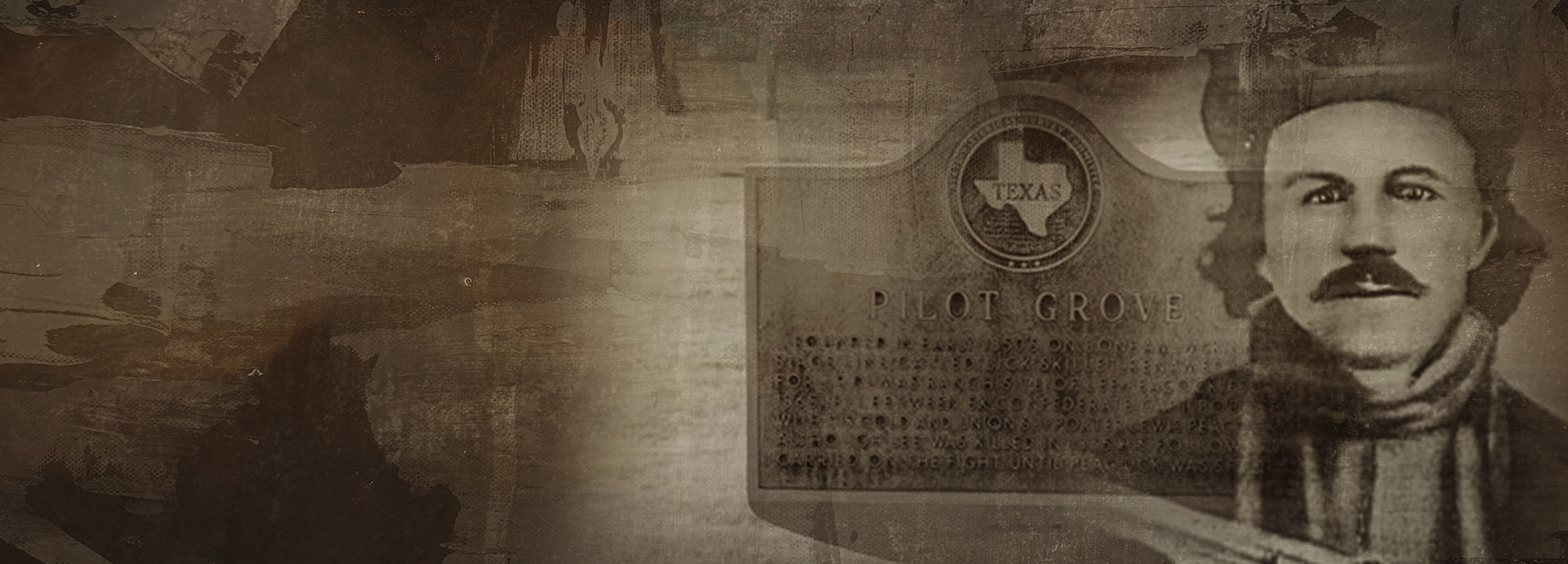
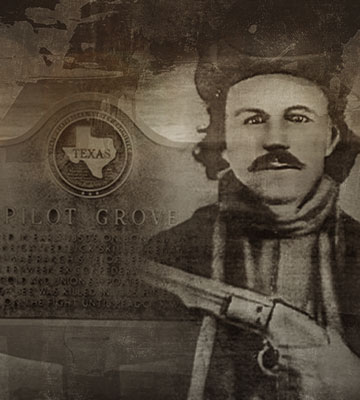
The Lee-Peacock feud was more than a neighborhood quarrel—it was a proxy war that shaped generations in North Texas. Contemporary and later accounts estimate that at least 40 men died between 1867 and 1871, making it one of the bloodiest feuds of the Reconstruction era in Texas. Today, historical markers in Pilot Grove preserve the memory of a conflict that showed how Civil War loyalties continued to divide communities long after Appomattox.
Suggest a Correction
We strive for accuracy and fairness. But if you see something that doesn’t look right, click here to contact us!

About the Author
Reagan Johnson has spent more than 20 years in television, publishing, and marketing, with the last four as a contributing writer, content strategist, and editor for INSP. Her travel writing has appeared in Forbes Travel Guide, Smithsonian Magazine, MSNBC Travel, Jetsetter, ISLANDS, and Weddings Unveiled, along with custom content for clients including Oil Nut Bay and Brand USA. She has served as travel editor-at-large and digital content fact-checker for Smithsonian Magazine’s native travel features. Reagan also manages a boutique marketing agency specializing in travel, hospitality, and tourism brands, blending editorial expertise with strategic insight to create engaging, audience-focused content.
Next Story