
Highlights
- The first bloodshed came in 1865, when a Hatfield relative allegedly killed a Union veteran from the McCoy family.
- A romance between Johnse Hatfield and Roseanna McCoy briefly bridged the families before deepening the divide.
- In 2003, descendants from both families signed a truce, more than a century after the feud officially ended.
A River Runs Between Them
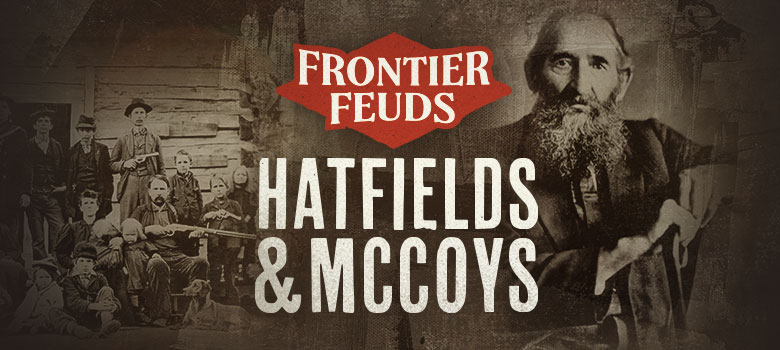
For more than two decades, a bitter feud burned along the Tug Fork of the Big Sandy River, dividing the hills of Kentucky and West Virginia. In these rugged hollows of the Appalachian frontier, two families—the Hatfields and the McCoys—became entangled in a cycle of pride, revenge, and rough justice that would come to symbolize one of the most notorious rivalries in American history.
Though the feud’s origins weren’t tied to a single moment, tensions brewed over time. Civil War loyalties, property disputes, and a deep sense of family honor fueled the divide. By the time the dust settled in the early 1890s, the damage on both sides was hard to ignore.
Meet the Hatfields and the McCoys
On the West Virginia side of the divide stood the Hatfields, led by William Anderson “Devil Anse” Hatfield. A former Confederate soldier, Devil Anse returned home to build a successful timber business and establish his family as one of the most powerful clans in Logan County. The Hatfields were wealthy by mountain standards, and their influence stretched through local courts, business dealings, and political connections.
Across the river in Kentucky lived the McCoys, headed by Randolph “Ole Ran’l” McCoy. Though proud and principled, the McCoy family did not enjoy the same level of wealth or protection. They farmed 300 rugged acres in Pike County and were seen by some as hot-tempered but fiercely loyal. While the McCoy family had mixed allegiances during the war, Asa Harmon McCoy—Randolph’s brother—served in the Union army, a point of tension with their Confederate-leaning neighbors across the river.
The differences between the two families were more than ideological. The Hatfields had power, while the McCoys often felt wronged by a system that seemed tilted against them. When disputes arose, as they inevitably did in close-knit rural communities, well … neither side had much interest in backing down.
The Fuse is Lit
The first major flashpoint came in 1865, when Union veteran Asa Harmon McCoy was ambushed and killed while hiding in a cave near his home. Though the murder was never officially solved, suspicion fell on Jim Vance, a Hatfield relative and member of a local Confederate militia.
More than a decade later, tensions reignited over a seemingly simple dispute: a hog. Randolph McCoy accused Floyd Hatfield of stealing one of his pigs. A trial was held, and the Hatfields won thanks in part to testimony from a McCoy relative who would later marry into their family.
Then, of course, came the romance. Johnse Hatfield began courting Roseanna McCoy, only to abandon her and later marry her cousin. What might have mended old wounds instead drove them deeper.
Violence Takes Hold
In 1882, things turned deadly. Ellison Hatfield, the brother of Devil Anse Hatfield, was stabbed and shot during a violent Election Day altercation wth three of Randolph McCoy’s sons: Tolbert, Pharmer, and Bud. When Ellison died from his injuries, the Hatfields took justice into their own hands, capturing the three brothers and executing them while they were being transported to jail.
The violence escalated. In 1888, a group of Hatfield men launched a pre-dawn raid on the McCoy homestead. The attack left two of Randolph McCoy’s children—Calvin and Alifair—dead, and his wife severely injured. That same year, a posse of Kentucky lawmen crossed into West Virginia and clashed with the Hatfields at Grapevine Creek. More blood was shed, and arrests soon followed.
Justice and Aftermath
With the violence spilling across state lines, the feud finally drew a firm response from the courts. Among those arrested was Ellison “Cottontop” Mounts, a Hatfield relative believed to have participated in the 1888 raid on the McCoy home. Mounts was tried in Pike County, Kentucky, and was convicted of murder. In February 1890, he was hanged before a large crowd, the only person executed for crimes tied directly to the feud.
Several other Hatfield men received life sentences, and with that, the cycle of bloodshed lost its grip. While tensions continued to simmer for years, the violent chapter of the Hatfield-McCoy feud had effectively ended by the early 1890s.
What the Feud Left Behind
The Hatfields and McCoys are more than a footnote in frontier history. Their story reminds us how quickly disputes can grow—and how hard they can be to stop. What began with suspicion and pride turned into years of loss, grief, and lasting damage. In 2003, more than a century after the final shots were fired, descendants of the two families signed a formal truce. The symbolism was simple but powerful: even the deepest divides can find peace with a little bit of time.
Suggest a Correction
We strive for accuracy and fairness. But if you see something that doesn’t look right, click here to contact us!

About the Author
Reagan Johnson has spent more than 20 years in television, publishing, and marketing, with the last four as a contributing writer, content strategist, and editor for INSP. Her travel writing has appeared in Forbes Travel Guide, Smithsonian Magazine, MSNBC Travel, Jetsetter, ISLANDS, and Weddings Unveiled, along with custom content for clients including Oil Nut Bay and Brand USA. She has served as travel editor-at-large and digital content fact-checker for Smithsonian Magazine’s native travel features. Reagan also manages a boutique marketing agency specializing in travel, hospitality, and tourism brands, blending editorial expertise with strategic insight to create engaging, audience-focused content.